
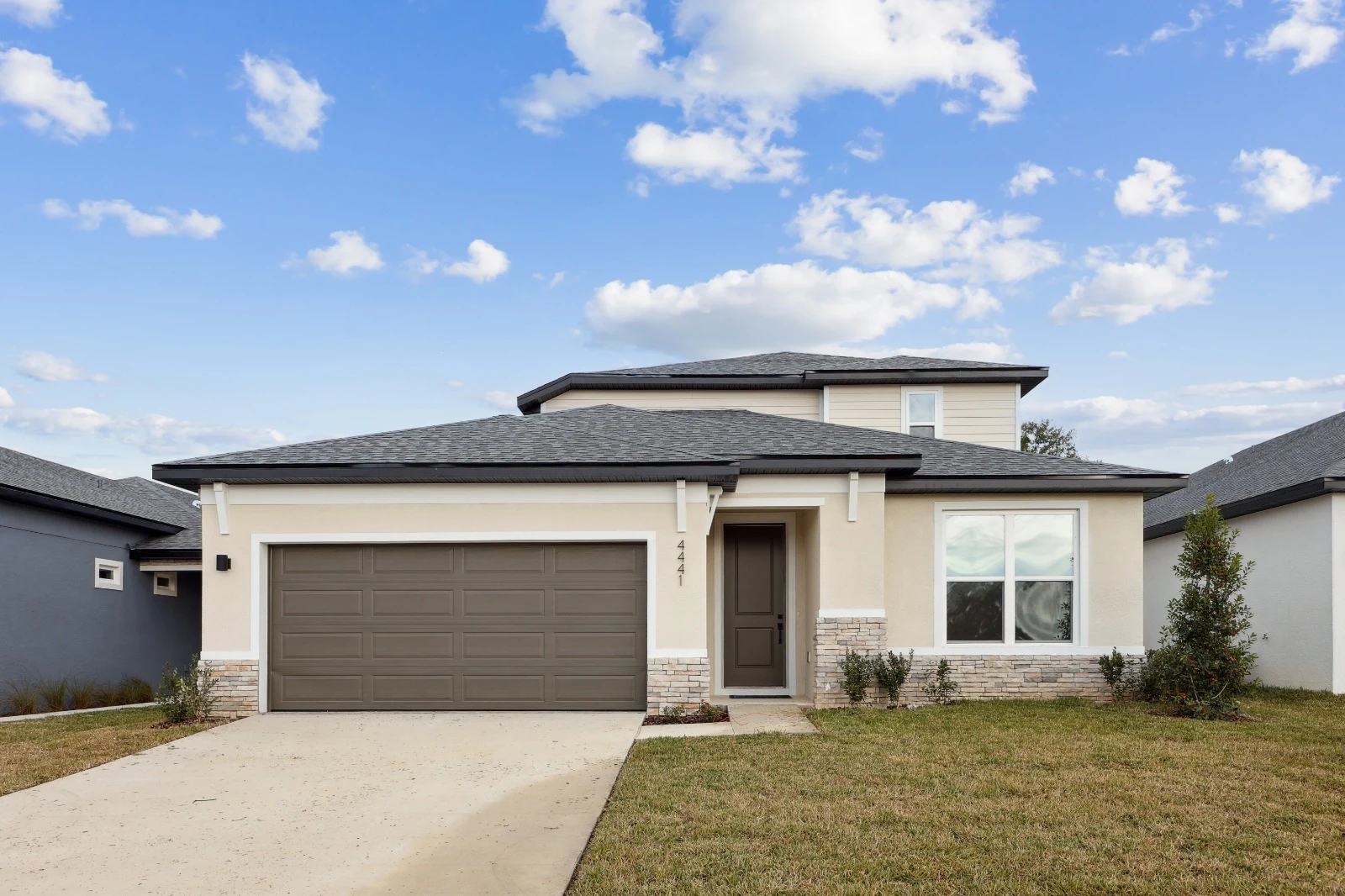
If you’re comparing new homes around Ocala, homestead exemptions belong in the ownership-cost conversation. They can reduce the value used to calculate certain property taxes. The amount you actually save depends on the home, your eligibility, and local tax rates.
Here’s how to separate today’s rules from the headlines, and what to check before building a budget around a new construction home.
What changed for the 2026 homestead exemption?
Under current Florida law, qualifying homeowners can receive an exemption of up to $25,000 that includes school taxes. An additional exemption applies only to non-school taxes and to assessed value above $50,000. That additional amount now adjusts for inflation. Annual inflation adjustments began in 2025.
| Part of the exemption | Maximum amount | Where it applies |
|---|---|---|
| First exemption | $25,000 | Includes school and non-school property taxes |
| Additional exemption | $26,411 | Non-school taxes, on assessed value above $50,000 |
That makes the maximum combined non-school exemption $51,411 for 2026, when the property’s assessed value supports the full benefit. The additional exemption rose from $25,722 in 2025 to $26,411 in 2026: a $689 increase in exempt value, not a $689 reduction in the tax bill. See the Florida Department of Revenue’s official adjustment table and current homestead exemption statute.
An exemption reduces taxable value. It does not lower the home’s purchase price or provide an equivalent cash payment.
What would Amendment 3 change if it passes?
Amendment 3 is on the November 3, 2026 ballot and needs at least 60% approval. If approved, it would take effect January 1, 2027. Your November 2026 tax bill would not change because of that vote. The Hillsborough County Tax Collector’s current explanation outlines the timeline.
For qualifying homesteads under the proposal’s residency rules, the total exemption for non-school property taxes would be:
- Up to $150,000 starting in 2027.
- Up to $250,000 starting in 2028.
- Adjusted for positive inflation beginning in 2029.
Those are proposed total exemption amounts, replacing the current non-school structure. They would not be added on top of the existing $51,411. The school-tax exemption would remain $25,000. The proposal also covers other property-tax provisions; this guide focuses on the homestead changes relevant to buyers. Read the proposed constitutional text, particularly pages 9–13.
School taxes and applicable non-ad valorem assessments, such as certain local service charges, would remain. A bigger exemption would not guarantee the same dollar savings for every buyer or eliminate every property-tax bill.
The December 31 date is about residency
The proposal distinguishes people who establish permanent Florida residency by December 31, 2026 from those who become residents later. It is not a requirement to buy or close on a home by December 31. Someone who is already a qualifying Florida resident could purchase later and apply for homestead then.
Under the proposal, someone becoming a Florida resident on or after January 1, 2027 would begin with up to a $50,000 non-school exemption, with inflation adjustments starting in 2028. The larger exemption would become available in the fifth year of homestead exemption, after four years of maintaining that exemption.
That is different from simply counting five years since moving to Florida. Eligibility would depend on implementation and the requirements of the Florida and U.S. Constitutions. The Volusia County Property Appraiser’s Amendment 3 FAQ explains these scenarios. Ask the property appraiser how your own residency and homestead history would be treated.
Budget for the finished home, not yesterday’s tax bill
When you compare new construction homes in Ocala, the previous tax bill may not represent the cost you’ll pay after purchase. An older bill can reflect a vacant parcel, an unfinished house, or benefits tied to a previous owner.
A typical ownership change causes assessed value to reset to just value the following January 1, subject to exceptions and any qualifying portability benefit. New construction and improvements can add taxable value when assessed on the first January 1 after substantial completion. Ask for an estimate that accounts for the completed house and the land, rather than relying on a vacant-lot bill. See the state’s property-tax guide for new buyers and Florida’s assessment statute.
Save Our Homes is a separate benefit. After the initial homestead assessment, it generally limits annual assessed-value increases to the lower of 3% or the applicable Consumer Price Index change. It does not cap the entire tax bill at 3%. The Department of Revenue’s Save Our Homes guide explains the distinction and portability.
The Marion County tax and portability estimator can help you explore an estimate. As checked October 17, it uses 2026 proposed millage rates and excludes non-ad valorem assessments and some additional exemptions. Treat its output as an estimate, not a quote or a promise of future taxes.
How to plan your homestead application in Marion County
Ordinary eligibility generally requires qualifying ownership and use as your permanent residence on January 1 of the tax year. The regular application deadline is March 1.
If you purchase in 2026 and seek the exemption for 2027, plan around January 1, 2027 for eligibility and March 1, 2027 for the regular filing deadline. Purchasing after January 1 generally does not create your own exemption for that same tax year. Review the state’s eligibility and filing guide for the requirements.
Start with the Marion County Property Appraiser’s homestead application page, or call 352-368-8300. Confirm the correct filing year, required documents, and the application process with the office. If your home is outside Marion County, use that county’s property appraiser.
A practical checklist before you choose a home
- Compare the total monthly cost. Include the mortgage, taxes, insurance, and any applicable association or other recurring charges.
- Request a completed-home tax estimate. Check the land, improvements, school taxes, and non-ad valorem assessments used in the calculation.
- Confirm your exemption eligibility. Ask the property appraiser about residency, ownership, and filing dates.
- Ask about portability if you already homestead in Florida. A qualifying Save Our Homes assessment difference may be transferable; it is not an automatic transfer of the seller’s exemption.
- Keep proposed savings out of your firm budget. Revisit Amendment 3 after the certified election outcome and any implementation guidance.
You can explore new construction homes in the greater Ocala area while checking these details with the appropriate professionals.
Common questions from homebuyers
Is Florida eliminating property taxes?
No blanket elimination is in effect under the changes discussed here. Amendment 3 is pending, and school taxes and applicable non-ad valorem assessments would continue.
Is the $250,000 homestead exemption already law?
No. It is a proposed non-school exemption for 2028, contingent on voter approval and the applicable eligibility rules.
Can a new construction home qualify?
Yes, a new home can qualify when the ownership, permanent-residence, timing, and other requirements are met. New construction does not automatically create an exemption. Confirm your circumstances with the property appraiser.
Do I inherit the seller’s exemption?
No. Apply for your own exemption when eligible. The seller’s existing benefits may remain on the property for the rest of the purchase year, but they do not establish your exemption for the next year. Your purchase can also change the assessed value used for future taxes; the seller’s bill should not be treated as your future bill.
Information checked October 17, 2026. This article provides general homebuyer information, not individualized tax or legal advice. The property appraiser determines exemption eligibility and assessed value. Consult the relevant office or a qualified tax professional about your situation. Proposed rules may change through the election and implementation process.
Official sources & useful links
- Florida Department of Revenue: 2026 homestead inflation adjustment
- Florida Statutes §196.031: homestead exemption
- Hillsborough County Tax Collector: Amendment 3 overview
- Florida Legislature: proposed constitutional amendment text
- Volusia County Property Appraiser: residency and Amendment 3 FAQ
- Florida Department of Revenue: property taxes for new buyers
- Florida Department of Revenue: Save Our Homes and portability
- Florida Department of Revenue: exemptions and filing
- Marion County Property Appraiser: homestead application
- Marion County Property Appraiser: tax and portability estimator